An annotating guide for the book’s much-repeated phrase: “I got up. I went to work in the morning.”

Candace, the main character in Severance by Ling Ma, works as a project manager in publishing. She handles the logistics of Bible production in Chinese factories from a cubicle in New York City, accomplishing repetitive tasks for good money.
Candace has a morning mantra, telling us ten times: “I got up. I went to work in the morning.” The repetition feels like emphasis. Oh, the monotony of her days!
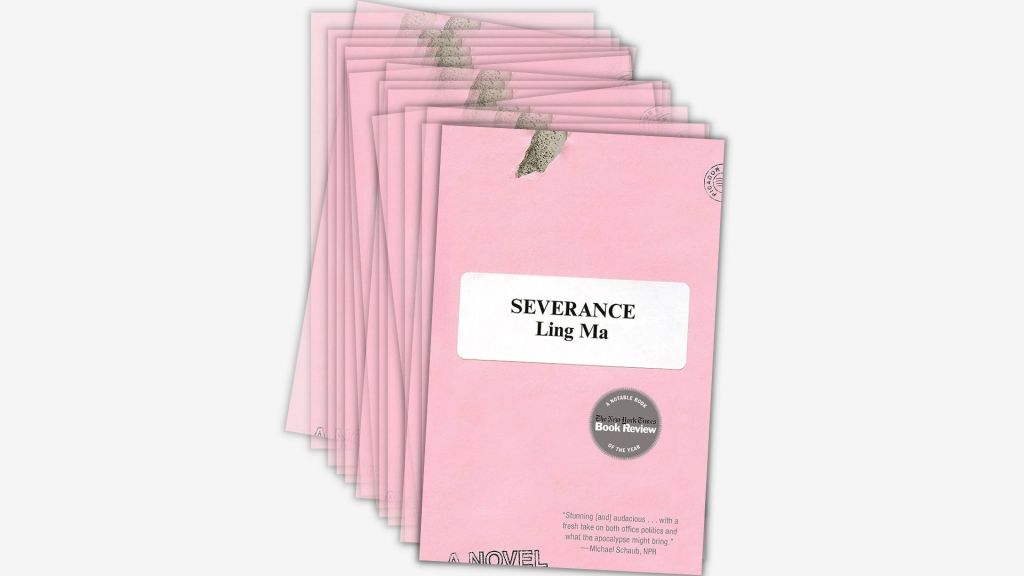
Annotating Guide for
“I got up. I went to work in the morning.”
You will need 10 tabs of the same color and a highlighter.
Chapter 14
- Page 150
- Page 151 (twice)
- Page 159
Chapter 17
- Page 191
Chapter 18
- Page 210
- Page 211
Chapter 22
- Page 248
- Page 254
Chapter 26
- Page 290 — Note: This one is phrased in the infinitive: “To wake up. To go to work in the morning.“
Related Wake Up Phrases and Moments
Sleeping, dreaming, and waking up are a theme in the book. Here are five more scenes that connect with Candace’s wake up mantra: “I got up. I went to work in the morning.”
You’ll need 5 more tabs of the same color and the same highlighter, if you choose to annotate these moments alongside Candace’s wakeup mantra.
1. Bob’s “Wisdom”
“Candace. When you wake up in a fictitious world, your only frame of reference is fiction.”
TAB: Chapter 2, p 29.
2. Candace’s Childhood “Tantrums”
“In the middle of the night, I would wake up gasping, as if struck in my sleep by some unknown force, and kick my legs and shriek.”
TAB: Chapter 16, p 184
3. The Group’s 9-5 Schedule at The Facility
“The days begin like this: They wake up in the morning.”
TAB: Chapter 19, p 220
4. Candace, Confined at The Facility, Has No Work
“I wake up in the morning.“
Chapter 19, p 223
5. Candace’s Escape Dream
“I wake up. It is so silent. I could fall through the cracks of such silence. There is nothing to do but wait. And wait. And wait.”
Chapter 23, p 269
 Annotate With Sara