Exploring The Adaptation’s Accuracy & Nitty Gritty Details
1. Wow! They Included Rebecca’s Amulet.
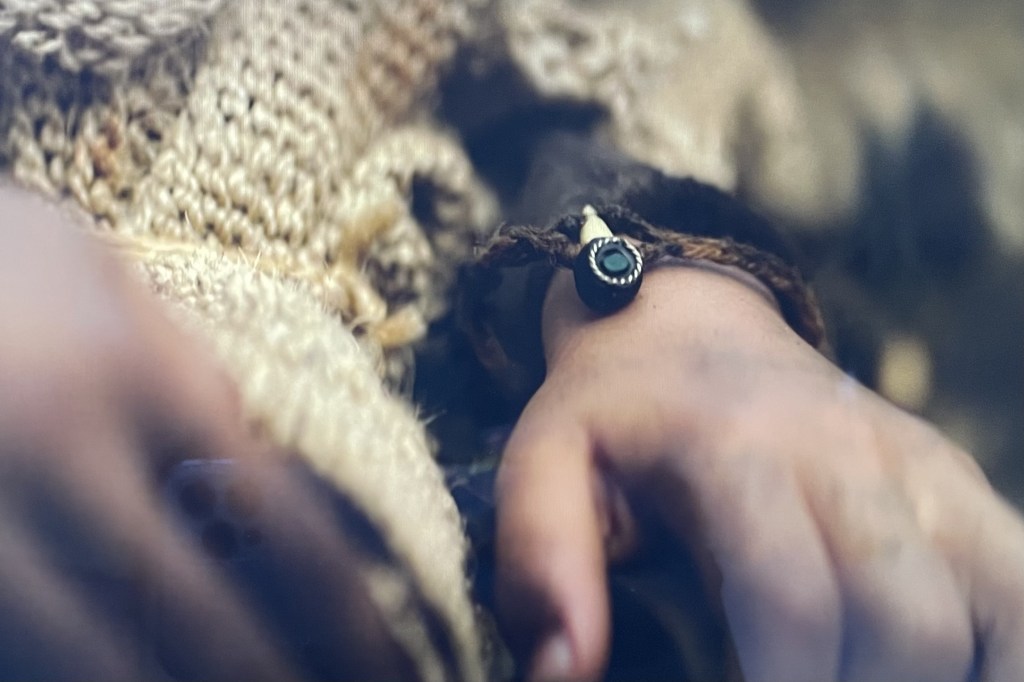
In the book One Hundred Years of Solitude, Rebeca arrives with an amulet on her right wrist. This happens in Chapter 3.
When the camera in Episode 3: A Daguerrotype of God zooms in on the amulet bracelet, I gasped. The deep dive into the text required for this costume detail is a big deal to me! It’s one of many signs of the intense love and energy that has gone into this project. Standing ovation for this adaption team!
There are only two people in all of One Hundred Years of Solitude who wear amulets on their right wrist: Rebeca and José Arcadio Jr.. They both wear them on the day they arrive in Macondo unexpectedly. Eventually, they get married too.
Annotate the amulets in in the original text:
“on [Rebeca’s] right wrist the fang of a carnivorous animal mounted on a backing of copper as an amulet against the evil eye.” (Chapter 3, p 42)
“on [José Arcadio’s] right wrist was the tight copper bracelet of the niños-en-cruz amulet.” (Chapter 5, p 92)
Crossing my fingers that there’s a similar close up of José Arcadio Jr.’s amulet on his right wrist, which is a niños-en-cruz charm, during his return-to-Macondo episode.
2. The insomnia plague signage was better on screen than in the book!
Macondo’s insomnia plague occurs in EP3: The Daguerrotype of God. When the disease starts to cause memory loss, Aureliano has the idea to label everything in the town. This is true in the book and the show.
In the show though, it’s comic relief! It’s funny.
These scenes in the series feels like one of the rare things from the book that’s a way better experience on screen.
Overall, I felt like being a viewer of the town’s insomnia revelry descend into an unraveling was a better time than being a reader of it.
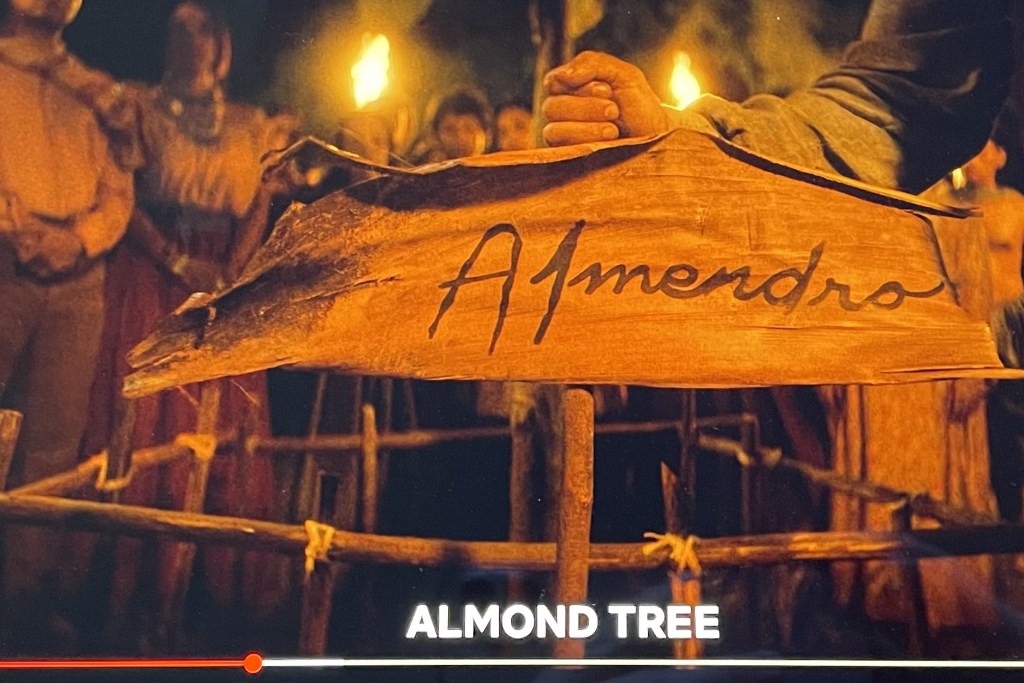
3. Why Was Almond Tree Planting Highlighted TWICE During The Insomnia Plague?
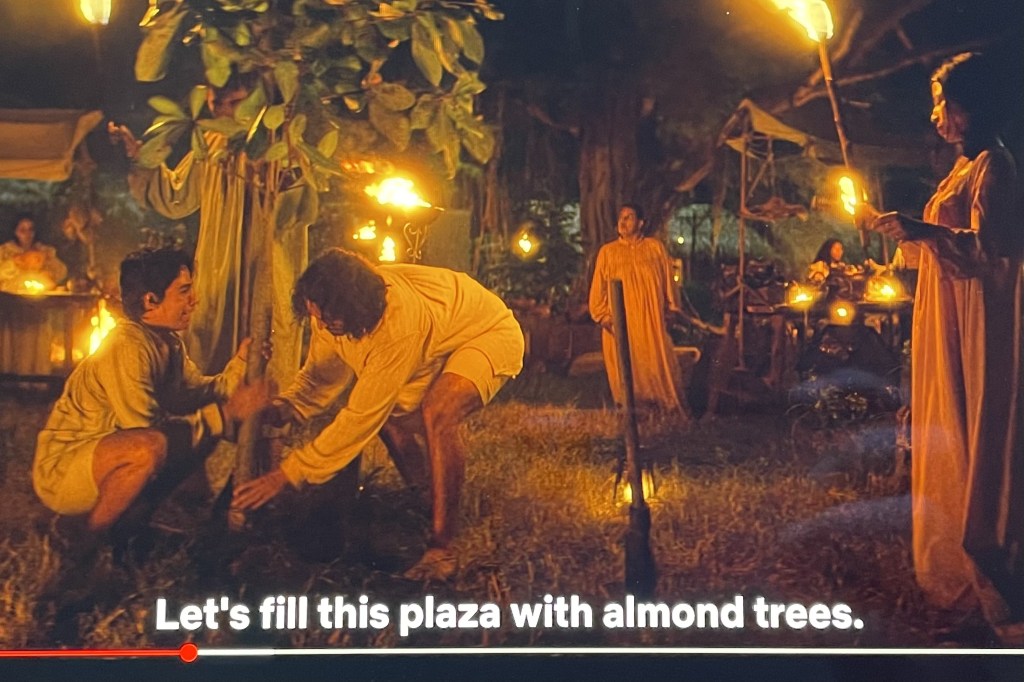
In the book, the almond tree planting that happens EP3 also happens. But it’s one of those quietly stated forgettable details. The text does not specify when, in Macondo’s history, the trees are planted–just that José Arcadio Buendía decided to go with almonds over acacias.
I’d like to get the behind-the-scenes scoop on why the almond tree plantings happen in this episode. Why was this detail drawn out of the text and included here? The choice very much piqued my interest!
Read the Almond Tree Planting in the Original Text:
“It was also José Arcadio Buendía who decided during those years that they should plant almond trees instead of acacias on the streets, and who discovered, without ever revealing it, a way to make them live forever. Many years later, when Macondo was a field of wooden houses with zinc roofs, the broken and dusty almond trees still stood on the oldest streets, although no one knew who had planted them.” (Chapter 3, p 40)
My personal literary theory on the almond trees …
José Arcadio Buendía wants to thwart death.
José Arcadio’s passing is marked by a torrential shower of yellow flower petals. Yellow petals cover everything in Macondo. Almond trees, famously, have snowy white petals. Was José Arcadio inspired to plant white flowering trees due to some subconscious premonition of his own death?
4. I Don’t Like This Deviation From the Book: Visitación’s Scenes.
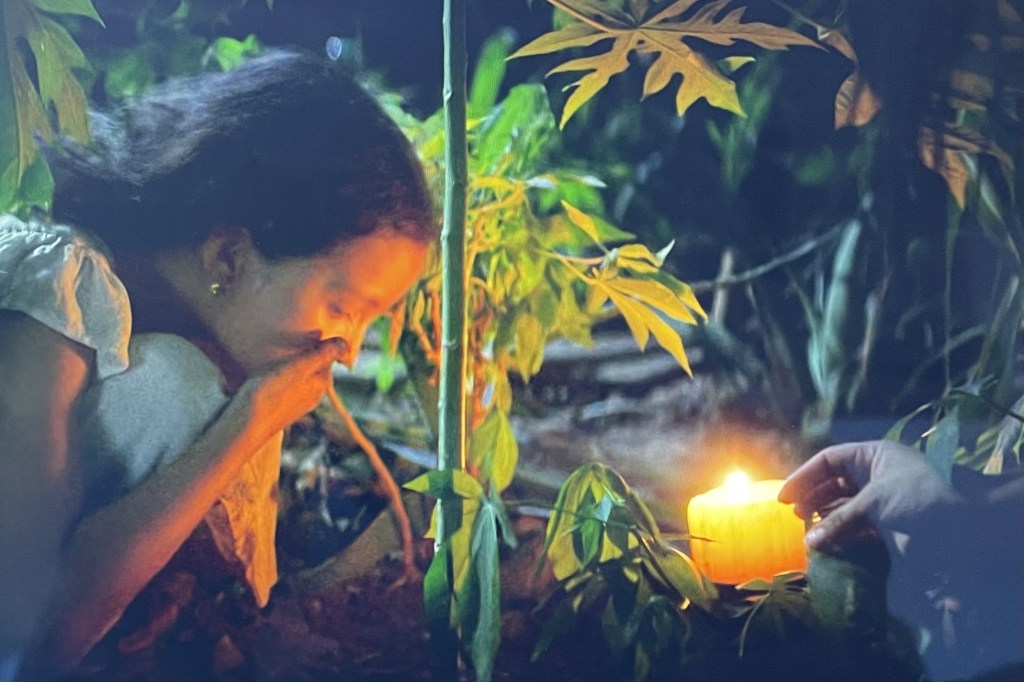
In the book Visitación & Cataure discover that Rebeca is eating dirt. In the series, instead of them, it’s Amaranta who makes the discovery. Then she drags the whole family out of bed to bear witness. IMO the more Visitación in the show the better. I don’t want them to cut or mess around with her scenes at all.
Read the Original Text:
“They could not get her to eat for several days. No one understood why she had not died of hunger until the Indians, who were aware of everything, for they went ceaselessly about the house on their stealthy feet, discovered that Rebeca only liked to eat the damp earth of the courtyard and the cake of whitewash that she picked off the walls with her nails.” (Chapter 3, p 43)
5. Seamless Scene Detail: The Mason & The Bag of Bones!
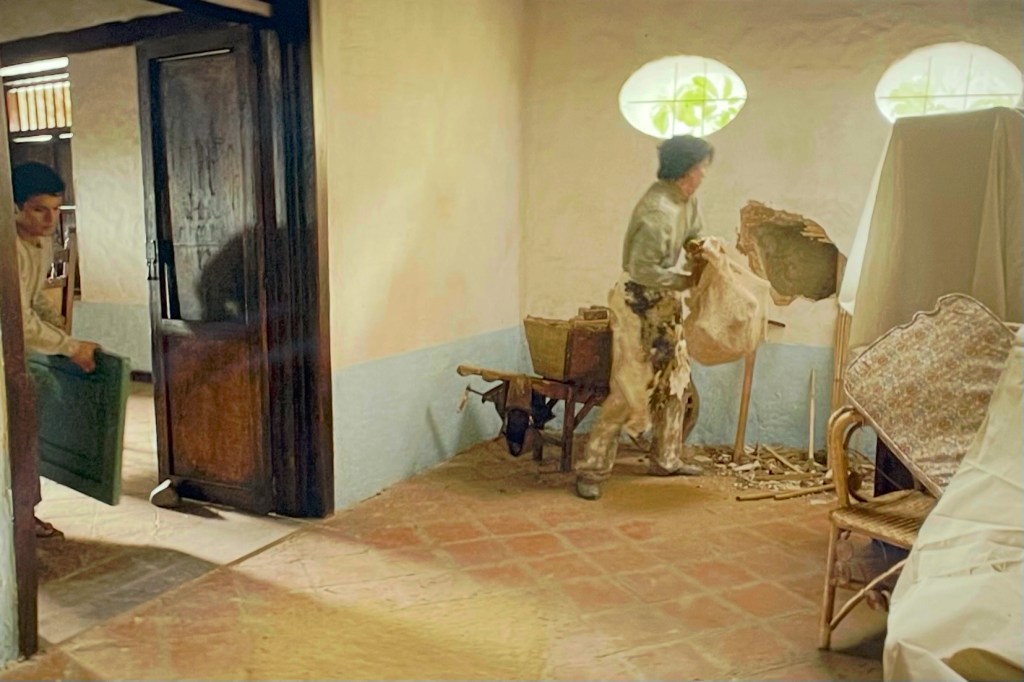
If I had blinked, I would have missed this moment: the mason in Episode 3 squirreling away the bag of bones in the walls. This quickly executed and seamless moment is a prime example of how complicated book details get into the episodes without being detrimental to pacing or being too clunky.
Psst. The bones in the wall will come up again later.
Read the Original Text About the Masons and The Bones:
“[…] workmen exhausted by sweat, who asked everybody please not to molest them, exasperated by the sack of bones that followed them everywhere with its dull rattle.” – p 56
“…looking for the bag of bones. […] He secretly summoned the masons and one of them revealed that he had walled up the bag in some bedroom because it bothered him in his work.” -p 78
6. It’s Confirmed: The Ancient Tome In EP1’s Opening Sequence is Melquíades’ Manuscript

The series has a mysterious, macabre beginning. One opening shot features a shadowed figure opening an old book.
This figure is Aureliano III, and the book is Melquíades’ manuscript. I was 99% sure of this, but am 100% sure now that EP3 has delivered confirmation.
There are several clips of Melquíades in EP3 working on the manuscript, drafting the ouroboros page and the family tree page we saw in EP1.
Side note, Melquíades return to Macondo was extremely true to the book.
The narration was taken nearly word-for-word (like a lot of the narration so far) from this sentence in the original text: “He really had been through death, but he had returned because he could not bear the solitude.” (Chapter 3, page 50).
7. “The Story of The Old Capon” Game Is From The Book
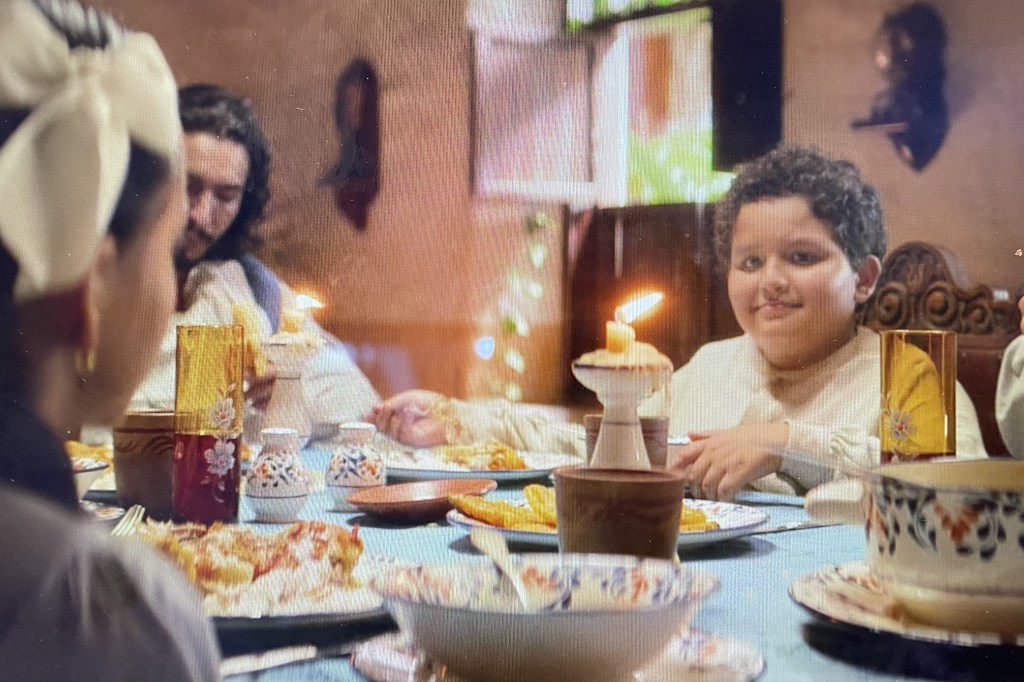
Here’s an example of a detail taken from the book, but used in a slightly different context: The Story of The Old Capon game. I thought this was a very cute way to create some dialogue by borrowing real material from the book.
Book: The Game is Played During the Insomnia Plague
In the book, the narrator doesn’t specify who leads the game. It’s only said that this game is played during the insomnia plague by “those who wanted to sleep” as one of “all kinds of methods of exhausting themselves.” (Chapter X, p 46)
Series: The Game Gets Played Before the Plague
The Netflix teams decided to depart from the book by having Rebeca lead the game at the dinner table BEFORE the insomnia plague sets in.
8. The series does a clearer job explaining the spread of the disease than the book.

In the book and show, the insomnia plague spreads to all of Macondo via the sale of contaminated candy.
In the book, however, this detail is very easy to miss!
It is explained in these two sentences.
“In the meantime, through an oversight that José Arcadio Buendía never forgave himself for, the candy animals made in the house were still being sold in the town. Children and adults sucked with delight on the delicious little green roosters of insomnia, the exquisite pink fish of insomnia, and the tender yellow ponies of insomnia, so that dawn on Monday found the whole town awake.” (Chapter 3, p 46)
It’s a big improvement, comprehension wise, to see the disease spread visually. The series dedicate several scenes to explaining it.
9. Are you reading along? Here’s Where Episode 3 Falls in the Book:
Episode Three begins with Rebeca’s arrival.
That happens in Chapter 3, page 41 in the book.
“That Sunday, in fact, Rebeca arrived.”
EP3 ends with the magistrate’s letter arriving.
This happens in Chapter 3, page 57:
“She showed him the official document. José Arcadio Buendía, without understanding what his wife was talking about, deciphered the signature.
‘Who is this fellow?’ he asked.
‘The magistrate,’ Úrsula answered disconsolately. ‘They say he’s an authority sent by the government.’
The Pietro Crespi part of the episode strays from the timeline of the book a tiny bit.
In the book, the magistrate arrives and his blue-house decree gets sent before Pietro’s arrival and before the party. In the series, the blue-house decree arrives during the party and Pietro is there.
The timeline alteration is not detrimental to the story IMO!
10. Yes, everyone danced to messed up pianola music in the book too!
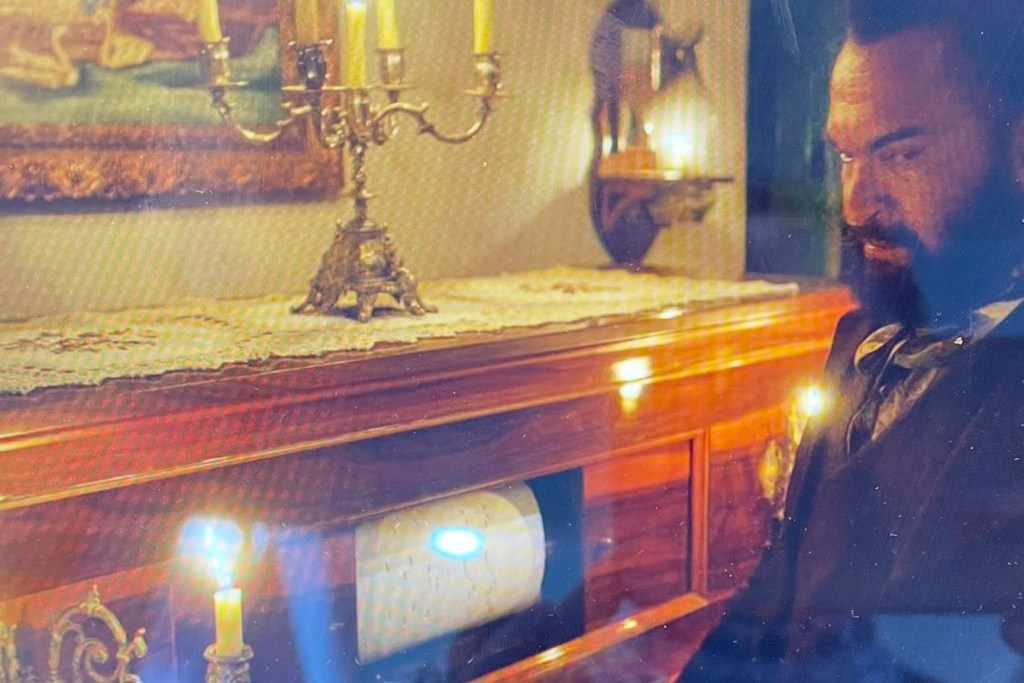
Read the music mishap everyone ignores in the original text:
“Finally José Arcadio Buendía managed, by mistake, to move a device that was stuck and the music came out, first in a burst and then in a flow of mixed-up notes. Beating against the strings that had been put in without order or concert and had been tuned with temerity, the hammers let go. But the stubborn descendants of the twenty-one intrepid people who plowed through the mountains in search of the sea to the west avoided the reefs of the melodic mixup and the dancing went on until dawn.” Chapter 4 (page 64)
 Annotate With Sara