SPOILER WARNING

About Motifs:
- Motifs are “a distinctive feature in a literary composition” (dictionary.com). In Cursed Daughters by Oyinkan Braithwaite, insect details pop up in the narrative with motif-like conspicuousness.
Thematic Implications of the Insect Motif
- In Cursed Daughters by Oyinkan Braithwaite, insects are strong motif that help develop a key theme in the book: that life is full of uncontrollable and invasive forces that are impossible to fully thwart. Insects—like love, curses, water1, and death*—are a powerful (and sometimes unwelcome) part of human living. Humans spend so much energy barricading ourselves from these forces, despite the inevitably that bugs, love, curses, water, and death can and will touch us one day.
*which are also important to the story
Highlights of the Motif:
- MONIFE: Insects are mostly associated with Monife, who is always banishing them. She washes ticks and fleas off Sango. She smashes a roach in the pantry, she eats ants, and symbolically hunts down a a mosquito, smearing blood on her scarred thigh in the process. The bug imagery around Monife is about showing the reader her successful attempts at controlling something that’s uncontrollable.
- ATMOSPHERE: The repeated presences of insects indoors also adds creepy atmospheric effects to this gothic story.
- 3 KEY SCENES THAT PAIR BUGS & GOLDEN BOY: Golden Boy is another one of those uncontrollable forces in Monife’s life. There is an interesting pattern of bugs (or insecticide!) being in key scenes with Golden Boy that suggest he (and his love) is pest in Monife’s life. See the jam scene p 130, burying Golden Boy’s gifts p 133, and the grocery story reunion p 284.
With all the text evidence at your disposal, your thoughts and analysis can run wild.
- Annotating the insect motifs is incredibly worthwhile. There’s nothing better for analysis than having an entire pattern highlighted or tabbed in its entirety, ready for selective rereading and deep diving.
The Annotation List
Here are all 21 mentions of insects!
- Part II Monife, Ch III, p 44 – fleas, ticks
- Part II Monife, Ch IX, p 64 – cockroaches
- Part IV Ebun, Ch III, p 122 – ants
- Part V Monife, Ch I, p 130-131 – ants
- Part V Monife, Ch I, p 133 – insect
- Part V Monife, Ch IX, p 158-159 – mosquito
- Part V Monife, Ch X, p 165 – parasite
- Part VI Eniiyi, Ch I, p 189 – Spider-Man
- Part VI Eniiyi, Ch II, p 191 – Spider-Man
- Part VI Eniiyi, Ch II, p 192 – flies
- Part VI Eniiyi, Ch V, p 202 – mosquito
- Part VIII Monife, Ch II, p 254 – ants
- Part X Monife, Ch II, p 284 – insecticide
- Part X Monife, Ch VIII, p 303 – “funereal for an insect”
- All the times the VW Beetle come up!
- Part I Ebun, Ch I, p 6
- Part II Monife, Ch II, p 39
- Part II Monife, Ch IV, p 45
- Part III Eniiyi, Ch I, p 82
- Part III Eniiyi, Ch I, p 84
- Part V Monife, Ch VIII, p 155
- Part VI Eniiyi, Ch IV, p 199
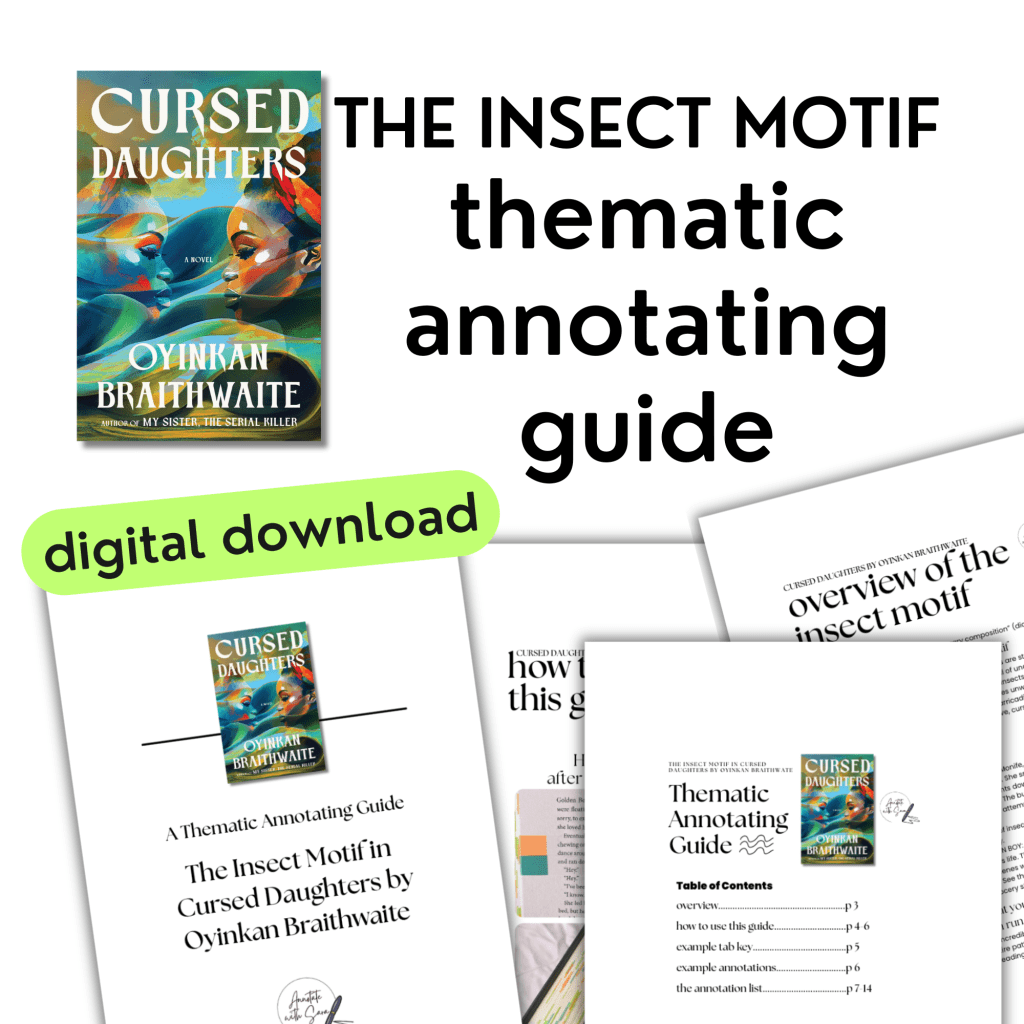
Want a more in-depth annotating guide for this motif? There’s one on my Etsy Shop for $0.99!
The guide contains more details, such as suggested margin notes and light explorations of interconnected quotes.
- Thank you Jess from @literaturenoirclub for pointing out the role of water to me as one of those big uncontrollable forces examined in the book! ↩︎
 Annotate With Sara