continuously updated blog post
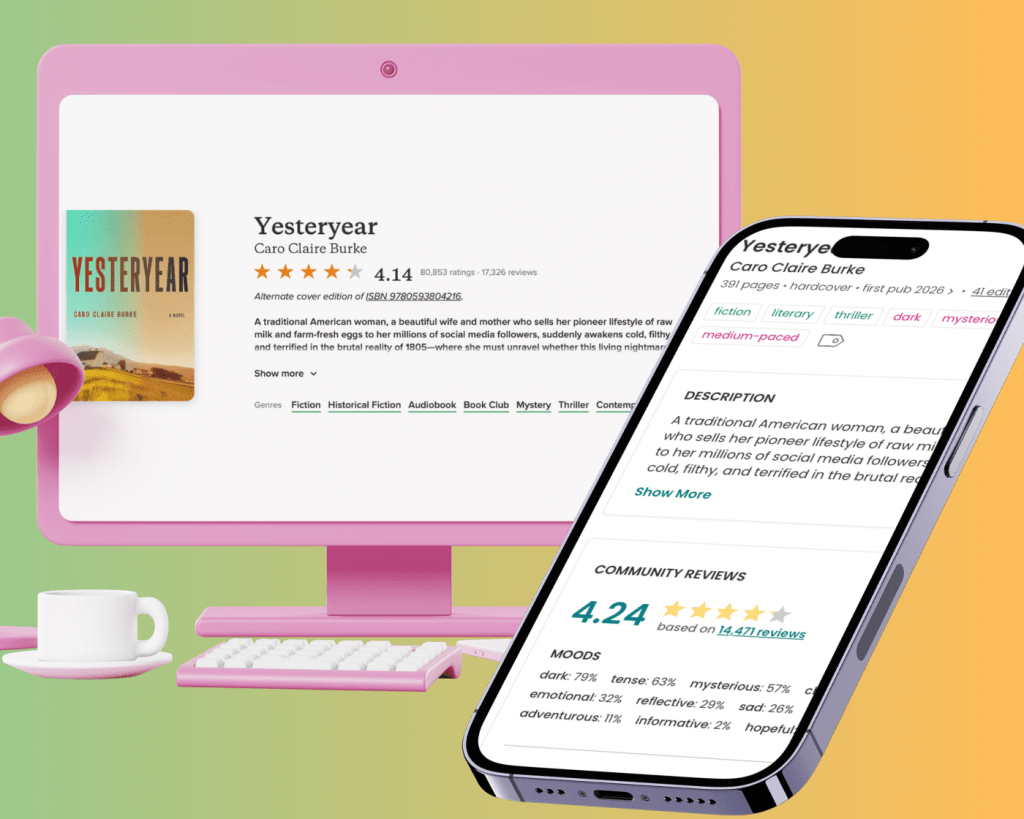
Yesteryear by Caro Claire Burke has been a buzzy book since its release on April 7, 2026.
Readers have now had almost 30 days to read Yesteryear, review it, sit with it, and talk about it online. I’ve been devouring the discourse and saving my favorite moments. A roundup of my favorite Yesteryear commentary so far is below.
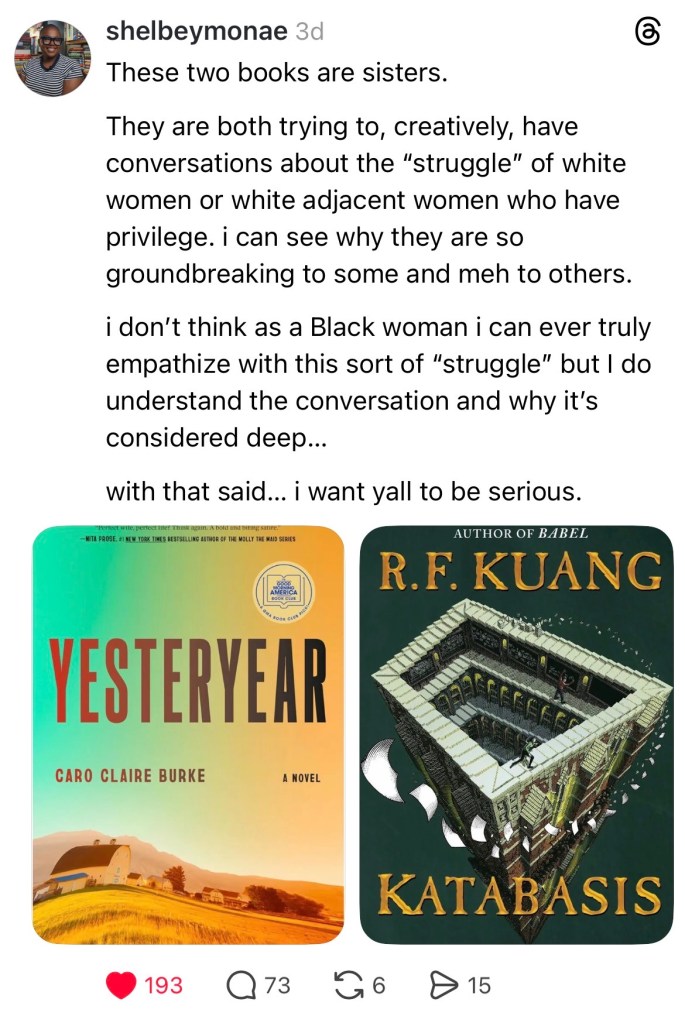
“These two books are sisters” by @shelbeymonae
Booktuber, Podcaster, Bookclub Leader, and Live Event Panel Moderator Shelbey of Shelbey and the Bookclub had a brilliant insight about Yesteryear by Caro Claire Burke and Katabasis by R.F. Kuang, noting they are sister books. On Threads, she explains: “both books are about women, both unlikeable, putting themselves through hell to prove they are worthy of this world and privilege they want to uphold. all of which is self serving and rooted in patriarchy and lies.” I couldn’t agree more about these similarities, and I have been drafting a mental Venn diagram for these two sister books ever since. I recently realized that both Natalie and Alice are sexually repressed and suffer with distorted self-image.
Shelbey’s Original Post:
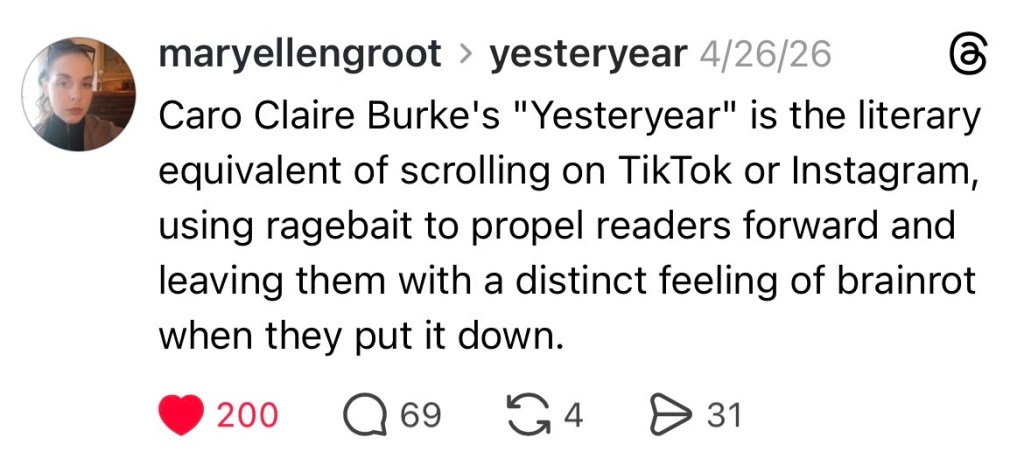
“Caro Claire Burke’s Yesteryear is the literary equivalent of scrolling on TikTok or Instagram” by @maryellengroot
I am fascinated by this idea that Caro Claire Burke translated (and sustained) online rage bait techniques inside a 391-page novel. I’m a little disgusted that I got sucked in, but also impressed with the evil genius of that kind of idea. By the way, I think this distinctly checks out as a careful artistic choice because Caro Claire Burke said on the Gays Reading podcast that she literally wrote this book to compete with TikTok.1
I recommend reading Maryellen Groot’s substack on this topic where she explains–with examples and text evidence–what worked and didn’t work for her in Yesteryear. She gets into specific details about Caro Claire Burke’s craft, like the explaining the “polished, almost algorithmic feel to the prose” in the beginning and how “Natalie writes like an Instagram caption.” She argues and proves how the whole novel felt like “scrolling along” and the problem of not letting readers sit with imagery, suggestions, and discomfort long enough. Of course, this writing style is by design, but as she explains (below) it’s not “productive.”
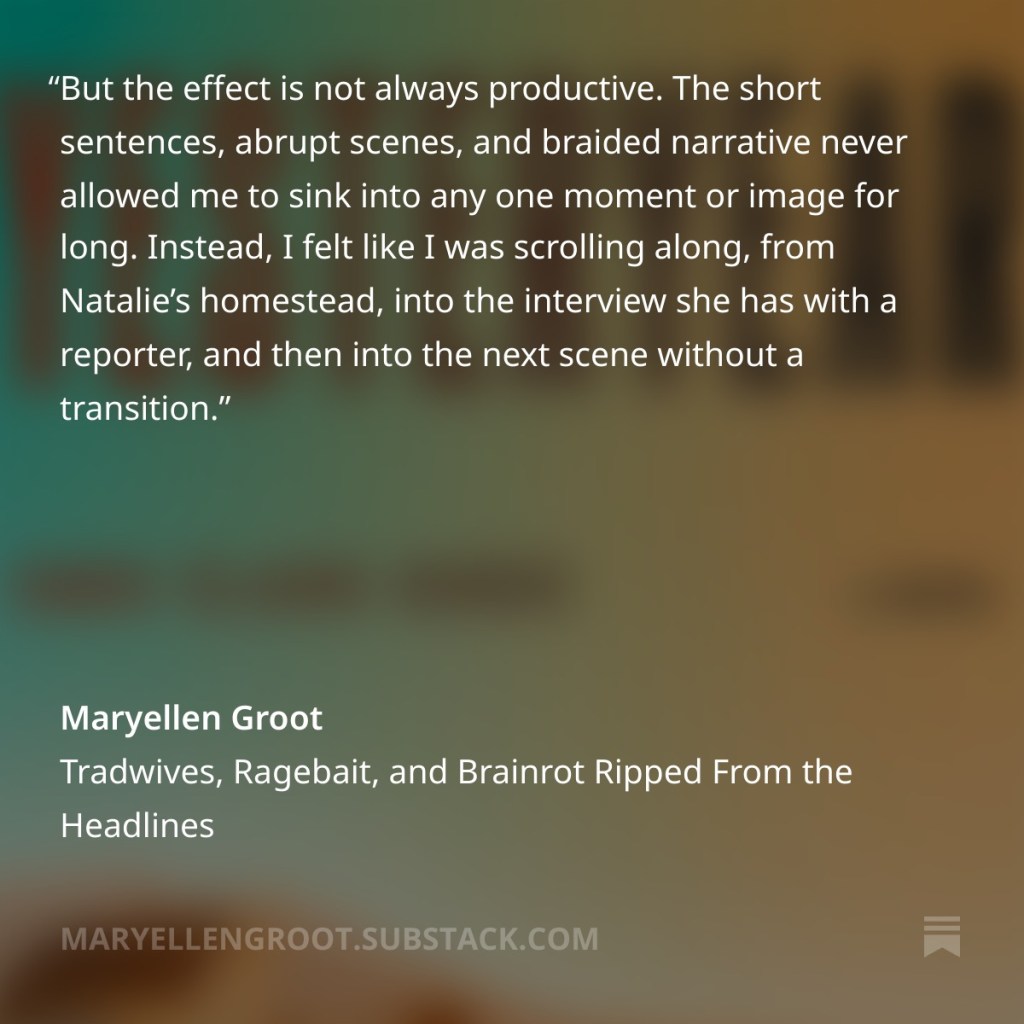
I adore Maryellen Groot’s conclusion. She put words to what I was feeling:
“That, I think, is the novel Burke almost wrote. And it’s why Yesteryear frustrated me so much. Not because it had nothing. Because it had everything: all the pieces, the moment, the discourse, the buzz. It had the cow, the camera, the daughter, the bread, the blood-red stain on the pure white dress. It just kept scrolling before any of it could become strange—or truly interesting.”
Yesteryear is “Lit Fit Satire” by @thisstoryaintover
I am always into the nuance of genre labels, and I appreciated the reel @thisstoryaintover did on both Yesteryear and the horror novel Trad Wife (that also just released) on Instagram.
Check out her full reel here:
https://www.instagram.com/reel/DX9xi0eOz9z/?igsh=NTc4MTIwNjQ2YQ==
The Atlantic is weighing in on the discourse now with “What Happens When the Tradwife Dream Goes Wrong?”
I like when this review delves into misogyny in the novel:
“What Natalie does seem driven by—more than faith, more than redirected ambition—is her instinctual loathing of other women.”
“Burke is making an implicit, and compelling, argument: that what unites men who want a submissive and traditional wife and women who want to be one is their shared misogyny, with the proviso that women—like Natalie—who are in the fold but can see the supposed deficiencies of other women get a pass.”
This point is important:
“Still, Yesteryear doesn’t seem majorly invested in social critique. It’s telling a story first and foremost…”
The NPR Book of the Day episode on Yesteryear was really good.
https://www.npr.org/2026/04/29/nx-s1-5803878/nprs-book-of-the-day-caro-claire-burke-yesteryear
“the way the twist was delivered was so frustrating” and “the author hated her main character” by @thestackspod
Traci Thomas, host of The Stacks Podcast, did a buzzy book review in a reel on Instagram, and I really liked her points about the twist, the author’s hatred for the narrator shining through in her treatment of her in the book, and also her point about nothing new being said about race, politics, and class.
Check out her full reel here: https://www.instagram.com/reel/DW658ycgVUp/?igsh=NTc4MTIwNjQ2YQ==
“White Kindred” by the League of Extraordinary Readers Podcast
The title of this podcast “White Kindred” made me laugh and think. It’s wry, and it was a little bit of an unexpected gut punch that really made me consider what Caro Claire Burke might have purposefully or inadvertently drawn from Kindred by Octavia E. Butler. I reread Kindred right after reading Yesteryear by Caro Claire Burke, and I did notice some interesting parallels that I might get into in more depth later. Here are few examples:
- both are first-person narratives
- both protagonists suddenly find themselves in the past
- both books are concerned with the freedom of children in the past and the role that childhood literacy and childhood education play in that freedom, with Kindred taking this way more seriously and treating it way more profoundly. TL;DR Natalie in Yesteryear neglects childhood literacy and education in 1855, and Dana champions it throughout the years spends in the early 1800s.
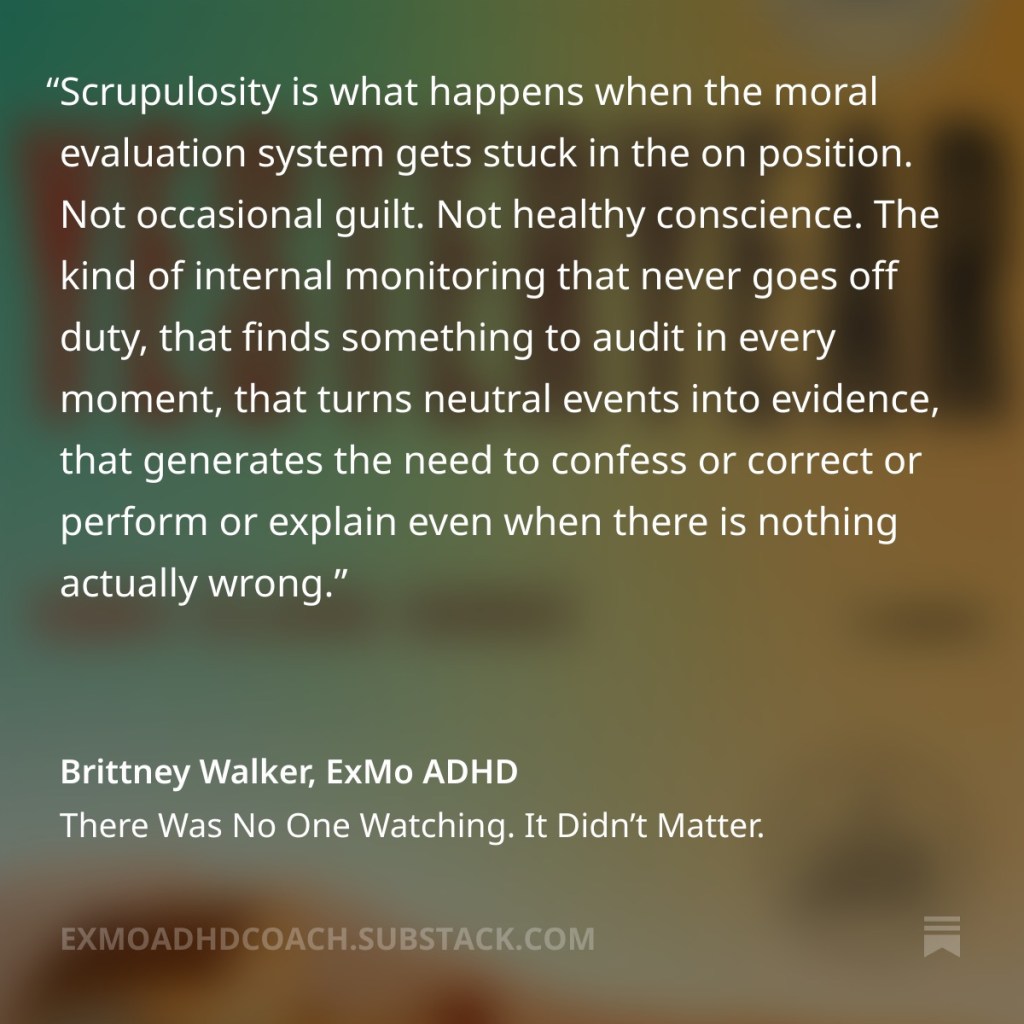
“There was no one watching. It didn’t matter.” by Brittney Walker on Substack
Caro Claire Burke shared screen shots of this Substack post on her Instagram account. I read the piece and wow: how this reader related to Natalie’s external internal auditing as an Ex-Mormon was interesting and powerful. She writes about how the “institution doesn’t have to still be standing for the damage to still be running.“
She introduced me to a new word and idea too: “scrupulosity.”
Want to annotate and go deeper into the text of Yesteryear by Caro Claire Burke?
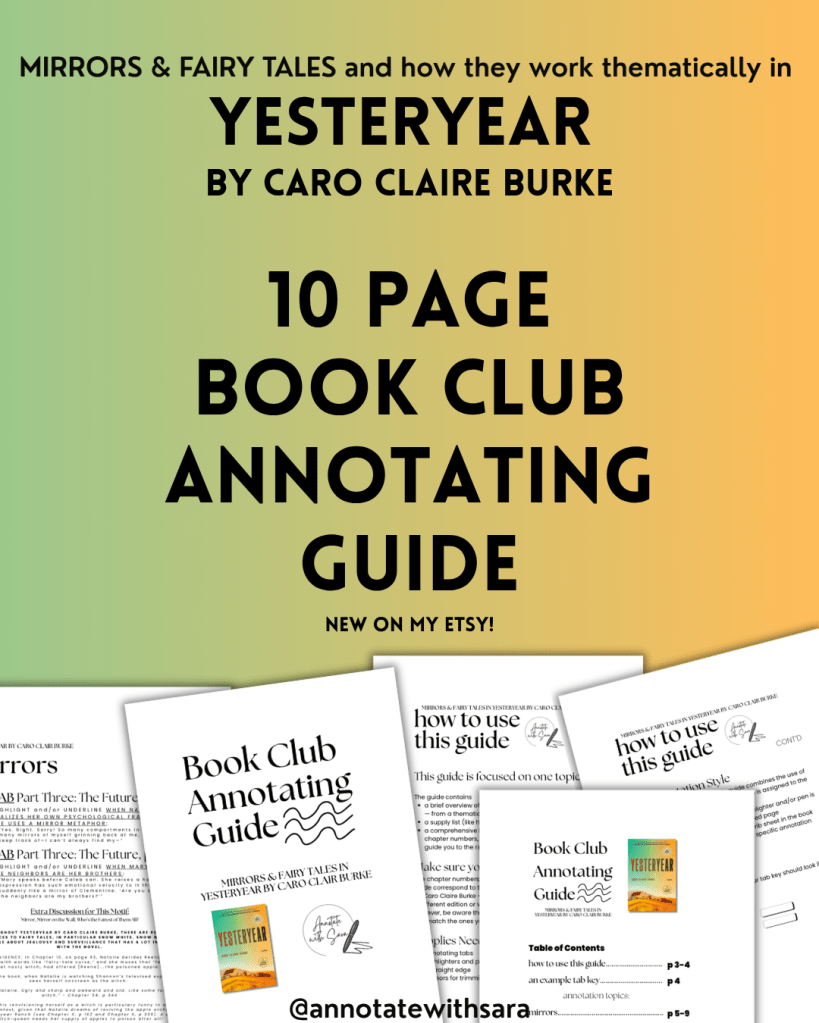
Mirrors and Fairy Tales and How They Work in Yesteryear by Caro Claire Burke, now on Etsy
I annotated so much in this book, and I made an annotating guide (digital download) about the mirror motif. Included is a printable book mark with an index of the dozens of mentions of fairytale details in the novel. Both of these topics, mirrors and fairytales, contribute layers to the book’s themes of make-believe and illusions. Check it out here on Etsy.
Footnotes:
- “And again, this just gets into the thing of not competing with other books, I’m competing with TikTok. And so that’s the question is if you want to be a novelist in 2026, you’re competing with social media, you’re not competing with other writers.”
– From Gays Reading: Caro Claire Burke, Yesteryear, Apr 7, 2026
↩︎
 Annotate With Sara