On Sale Sep 1, 2026 | 336 pages | Algonquin Books
A 1994 classic has metamorphosed into a graphic novel. On September 1, 2026, In the Time of the Butterflies by Julia Alvarez will emerge in a new form: a richly illustrated graphic novel by Krystal Quiles. Algonquin Books sent me the first 77 pages of the new adaptation, and I devoured them. Here are my first impressions, and yes, I can’t wait to read the entire thing once it’s published.
4 Distinctive Colors for the 4 POVs
Krystal Quiles’ various style choices for the illustrations are beautiful. She depicted each sisters’ POV with a unique color and chose a monochromatic drawing style. The four separate colors honor how different the four sisters are, a distinctiveness that Alvarez cultivates in her writing and that Quiles highlights (and preserves) with the color choices.
The Original Narrative Structure is Preserved
This graphic novel is a faithful adaptation that preserves the novel’s original structure. There are 12 Chapters and an Epilogue just like Alvarez’s original.
Fela
I like seeing Fela on the pages of this graphic novel. We just hear snippets about her and of her in the novel. There are no vivid depictions of her and what she looks like, but in the graphic novel, she’s fully imagined on the page.
Rich Pastels
The colors Quiles works with are rich and strong, but they also have a pastel hue that hints at aging and wear. This is an apt choice: Dedé is older now and so is her story. To me, the pastels communicate the softening of painful memories over time.
The Tree on the Cover
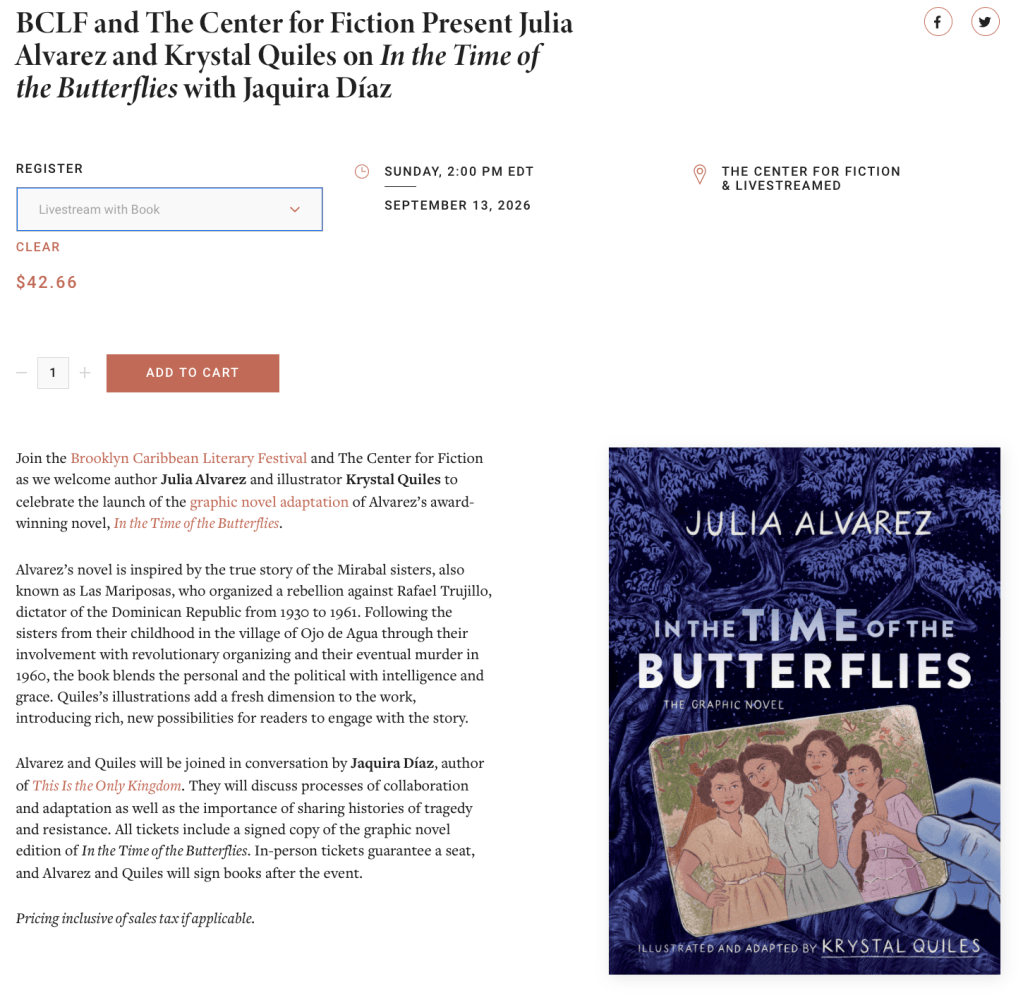
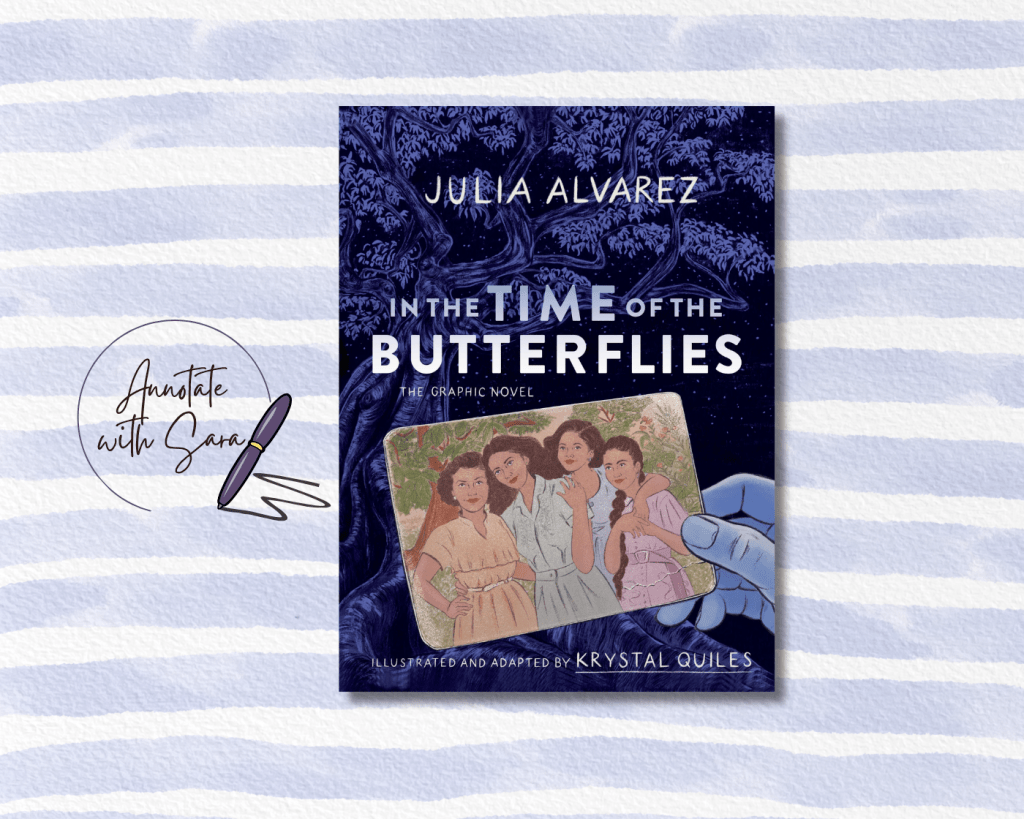
The tree on the cover is the anacahuita tree from the novel and the first sign of the faithfulness and care that went into the adaptation.
One Big GOOD Change – A Character Cut!
I think people who love this novel and know it well will be delighted by this faithful, loving adaption, but I do think these same novel-lovers should know right off the bat that the graphic novel cuts out a character from the original. It is a decision I admire! Quiles decides to cut the unnamed American “interview woman” that Dedé reluctantly prepares to receive as a guest when the novel begins. I don’t miss this character at all because chopping out her character allows Minou to appear right away, and Quiles wrote Minou so that she seamlessly absorbs all the interview woman’s actions. Having Minou arrive at the beginning is a change that feels natural and feels right.
Check out this post on Instagram:
Virtual Event with Julia Alvarez & Krystal Quiles!
The Center for Fiction is offering Livestream Tickets for Julia Alvarez’s and Krystal Quiles’ Event at the Brooklyn Caribbean Literary Festival. Grab your ticket for Sunday, September 13 at 11:00 PDT!