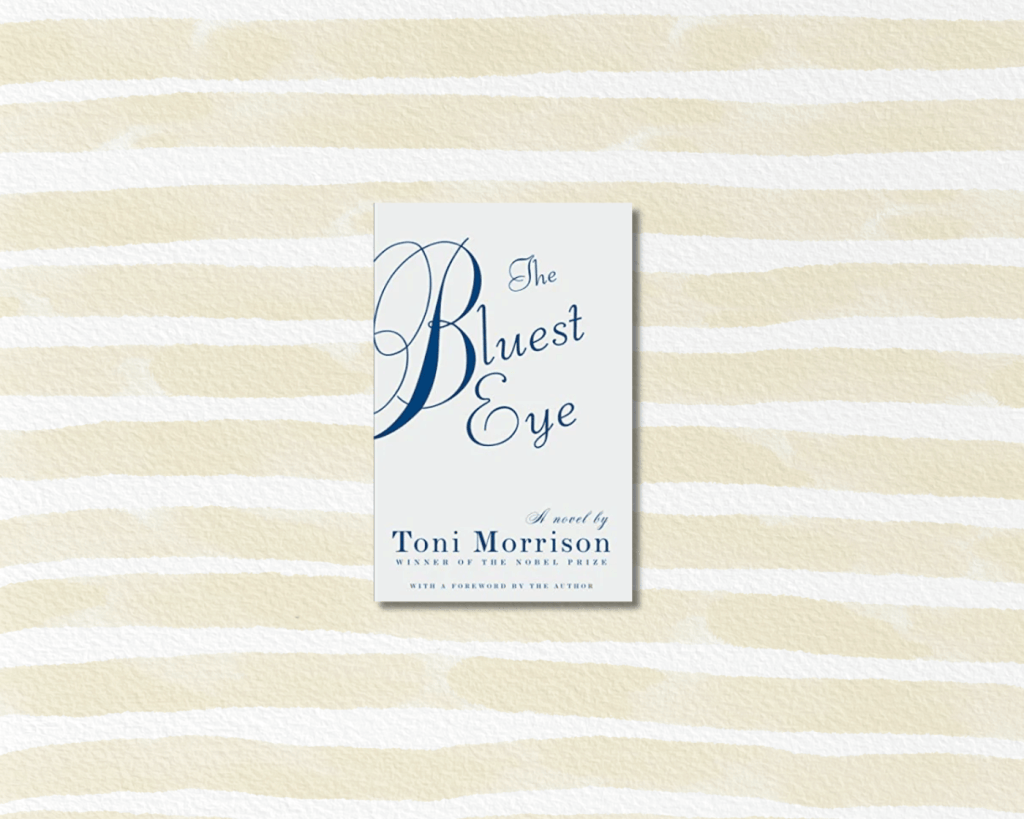
In The Source of Self Regard, Toni Morrison said “[…] palette, or color, is one of the last and most crucial of my decisions in developing a text.”1 I thought of this quote when I realized that The Bluest Eye is a novel bookended by floral colors. Claudia, the narrator of The Bluest Eye, famously begins the book noting the absence of marigolds: “Quiet as it’s kept, there were no marigolds in the fall of 1941.” Just as strikingly, she ends the novel with the presence of sunflowers: “At least on the edge of my town, among the garbage and the sunflowers of my town, it’s much, much, much too late.”
What color are the marigolds that never grow? I have always automatically pictured Claudia and Frieda planting the orange variety, but what if the marigolds were yellow, like the sunflowers at the end? That would mean, intriguingly, that The Bluest Eye is a novel that begins and ends with the color yellow, marigold yellow and sunflower yellow.
With marigolds and sunflowers in mind, I searched The Bluest Eye for the color yellow, conducting an informal, at-home color-study. These are my literary findings in a nutshell:
- Yellow appears in flashing glimpses. It’s a blip in the landscape, not an omnipresent color.
- Yellow accompanies characters as they seek temporal comforts, think about tidiness, or find pleasure.
- There are 10 different tangible yellow things in the novel (detailed below).
The Yellow Data: What I Studied in The Bluest Eye + How To Annotate Your Book
Below is a numbered list of the 10 yellow things I studied in The Bluest Eye with quotes from the novel listed underneath them in bullet points. The page numbers provided correspond to the Vintage International edition of The Bluest Eye, the one with the plain gray cover and blue script (ISBN: 978-0-307-27844-9).
(1) doll hair
- “—all the world had agreed that a blue-eyed, yellow-haired, pink-skinned doll was what every girl child wanted.” p 20
- “twisted the yellow hair” p 21
- “No synthetic yellow bangs suspended over marble-blue eyes, no pinched nose and bowline mouth.” p 190
(2) the heads of dandelions
- “But they do not want the yellow heads—only the jagged leaves.” p 47
- “She owned the crack that made her stumble; she owned the clumps of dandelions whose white heads, last fall, she had blown away; whose yellow heads, this fall, she peered into.” p 48
(3) candy
- “He scoots three Mary Janes toward her—three yellow rectangles in each packet.” p 49
- “Each pale yellow wrapper has a picture on it. A picture of little Mary Jane, for whom the candy is named. Smiling white face. Blond hair in gentle disarray, blue eyes looking at her out of a world of clean comfort.” p 50
- “Fluffy sweaters the color of lemon drops tucked into skirts with pleats so orderly they astounded us.” p 62
(4) Mr. MacTeer’s & Maureen Peal’s skin tone
- “His skin takes on the pale, cheerless yellow of winter sun.” p 61
- “A high-yellow dream child with long brown hair braided into two lynch ropes that hung down her back.” p 62
(5) Maureen Peal’s sweater
- “Fluffy sweaters the color of lemon drops tucked into skirts with pleats so orderly they astounded us.” p 62
(6) window curtains
- “She came in the back door with some folded yellow curtains which she piled on the kitchen table.” p 98
(7) the little Fisher girl’s hair
- “Her hair was corn yellow and bound in a thick ribbon.” p 108
- “As Pecola put the laundry bag in the wagon, we could hear Mrs. Breedlove hushing and soothing the tears of the little pink-and-yellow girl.” p 109
- “Then she brushed the yellow hair, enjoying the roll and slip of it between her fingers.” p 127
(8) Cholly Breedlove’s eyes
- “He came big, he came strong, he came with yellow eyes, flaring nostrils, and he came with his own music.” p 114
- “She could not stop her laughter—not until he looked up at her and she saw the Kentucky sun drenching the yellow, heavy-lidded eyes of Cholly Breedlove.” p 115
(9) lemonade
- “And that lemonade Mama used to make when Pap came in out of the fields. It’d be cool and yellowish, with seeds floating at the bottom.” p 115
- “I begin to feel those little bits of color floating up into me—deep in me. That streak of green from the june-bug light, the purple from the berries trickling along my thighs, Mama’s lemonade yellow runs sweet in me.” p 131
- “They give him lemonade in a Mason jar.” p 158
(10) sunflowers
- “And these houses loomed like hothouse sunflowers among the rows of weeds that were the rented houses.” p 18
- “Where the grass is cut with a scythe, where rooster combs and sunflowers grow in the yards, and pots of bleeding heart, ivy, and mother-in-law tongue line the steps and windowsills.” p 82
- “The birdlike gestures are worn away to a mere picking and plucking her way between the tire rims and the sunflowers, between Coke bottles and milkweed, among all the waste and beauty of the world—which is what she herself was.” p 205
- “At least on the edge of my town, among the garbage and the sunflowers of my town, it’s much, much, much too late.” p 206
Analysis Tips – How I Did My Analysis
Knowing that Toni Morrison also said, “Color says something directly or metaphorically2, I decided to reread each section in The Bluest Eye that had a tangible yellow thing. I looked for salient key words. I highlighted them in the book and then wrote them down in a journal in a long list. This extraction of bits of text collected on a new page helped me see what yellow was doing in the novel, how it was a color that had to do with pleasure, orderliness, and comfort (or the lack of those things). Other patterns emerged. I noticed that Claudia and her mother weren’t as affected by yellow, but that Pecola and her mother were really affected by it. Claudia, for example, doesn’t get pleasure from the yellow hair on dolls. She enjoys taking the dolls apart, “twist[ing] the yellow hair.” Her mother Mrs. MacTeer doesn’t love her yellow curtains. She takes care of them because she loves to sing, and she sings while she does household chores. She piles the curtains on the table, forgets to put them on the curtain stretcher, and Claudia watches her choose to sweep the porch so she can keep singing and moving. In contrast, Pauline and Pecola are drawn to yellow things. Pecola likes the fine yellow hair of dolls and models (like the girl on the candy wrapper) and sweet yellow-wrapped candies (which give her orgasmic-level pleasure). Pauline likes taking care of the Fisher girl’s yellow hair and describes having an orgasm as a rainbow of color. One of those colors is sweet yellow lemonade. Pauline and Pecola also are drawn to small orbs of yellow in the landscape: dandelions for Pecola and Cholly’s yellow eyes under the Kentucky sun for Pauline.
Happy annotating!
– FOOTNOTES

